
Steam authorization
Steam authorization is required to use the website. Upgrader.pro also states that it is not affiliated with Valve Corporation or the Steam platform.
Upgrader.pro is built around CS2 item upgrades, a platform balance, Steam authorization and item withdrawals. The account flow brings these features together, with rules that matter before you top up or attempt an upgrade.
The platform lets users authorize through Steam, manage an internal balance, select CS2 items and use platform functions including upgrades. The Terms state that authorization through Steam is required and that a personal account is created after login, showing the current balance, transaction history and access to platform features.
Steam authorization is required to use the website. Upgrader.pro also states that it is not affiliated with Valve Corporation or the Steam platform.
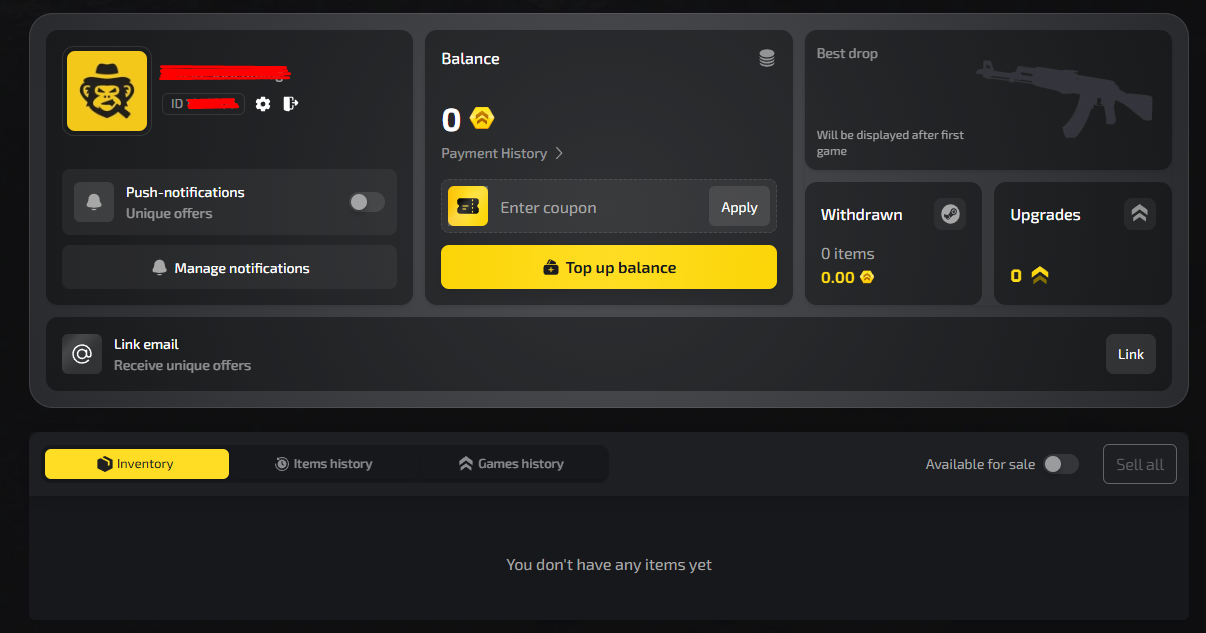
The balance is shown in platform units and is intended for functions available on Upgrader.pro. The account interface also includes payment history and a coupon field.
Choose the item value you want to use, select a target skin and check the displayed chance before confirming the upgrade.
When the target value changes, the displayed probability changes with it; the same sequence is used throughout the CS2 skin upgrade process.
The account area brings together the balance, payment history, coupon entry, top-up controls, withdrawn items, upgrade activity and inventory history. This is the practical starting point for managing activity after Steam login.
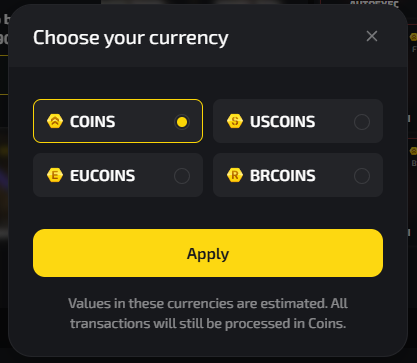
The interface can display estimated values as COINS, USCOINS, EUCOINS or BRCOINS. The currency selector itself notes that these values are estimates and that transactions continue to be processed in Coins.
This distinction matters when comparing the number shown in the interface with a card or crypto payment amount.
The upgrade interface has two sides: the value used for the attempt and the target item. Upgrader.pro's help panel says users can select one or more skins on the left, choose the desired skin on the right and then press Upgrade. It also states that the success probability depends on the price relationship between the selected value and the target item and can range from 0.01% to 80%.
Choose one or more inventory items or available balance to use for the attempt.
Browse or filter the available target items and check the displayed price.
Check the probability shown by the interface before committing the upgrade.
Press Upgrade only after checking the target item and displayed chance.
Go directly to the platform when you are ready to select an item and target skin.
The top-up interface separates Cards, Crypto and Skins. Available providers, currencies and minimums can vary in the live interface, so the amount displayed at the time of payment should be treated as the current value.
Card and local payment options appear according to the selected payment currency and availability.
The interface shown includes multiple USDT networks plus TRX, TON, ETH, LTC, SOL, MATIC and other crypto options.
Skin top-ups are offered through the skin deposit flow. A Steam Trade Protection notice can affect when deposited skins are credited.
Cards, crypto networks and skin top-ups are covered in more detail within Upgrader.pro deposits, including the Steam Trade Protection notice.
Use the current top-up interface to check the methods and minimum amount available to your account.
The Terms state that items can be withdrawn through an API bot on Steam. They also describe an important usage requirement for items acquired with deposited funds: platform actions such as upgrades or other available operations must be completed for an amount at least equal to the corresponding top-up before withdrawal can be available.
The Terms say the minimum usage requirement applies to each balance top-up separately, and a new top-up adds its amount to the total required usage. Until that requirement is fulfilled, item withdrawal, exchange or other extraction of value may be restricted.
The same account rules apply when withdrawing CS2 skins, including cases where an item is temporarily unavailable.
The platform Terms contain several account and transaction safeguards users should understand before depositing.
The Terms state that users under 18 are not permitted to use the website.
Multi-accounting, credential sharing and using a Steam account not registered in the user's own name are prohibited.
Identity or source-of-funds checks may be requested at first top-up, after transaction thresholds or when suspicious activity is detected.
The Terms prohibit bypassing restrictions and list unauthorized VPN/proxy use, bots, scripts, auto-clickers and similar tools among restricted activities.
Steam, payment and account safeguards are also part of Upgrader.pro safety and legitimacy, alongside the current Terms.
A refund is different from withdrawing a CS2 item. According to the Terms, a refund may be available only when deposited funds have not been used, no more than 14 calendar days have passed, and the user follows the required verification procedure.
The VIP Club adds tier-based cashback and other account benefits. The current VIP interface shows Silver, Gold, Platinum and Diamond levels with different monthly thresholds and perks.
Higher account activity can also affect VIP Club levels, while a valid Upgrader.pro promo code can be entered in the coupon field and Steam login remains central to account access and item transfers.
Yes. The Terms state that Steam authorization is required to use the website.
It is the internal platform balance used for available functions. The account interface displays the balance, payment history and top-up controls.
The current top-up interface includes crypto methods and several networks. Check the live payment window for the options available to your account.
The Terms state that acquired items can be withdrawn through a Steam API bot, subject to the applicable account and usage requirements.
Yes. The Terms allow identity and source-of-funds verification in specified circumstances, including suspicious activity and certain transaction events.
Information updated: August 17, 2026